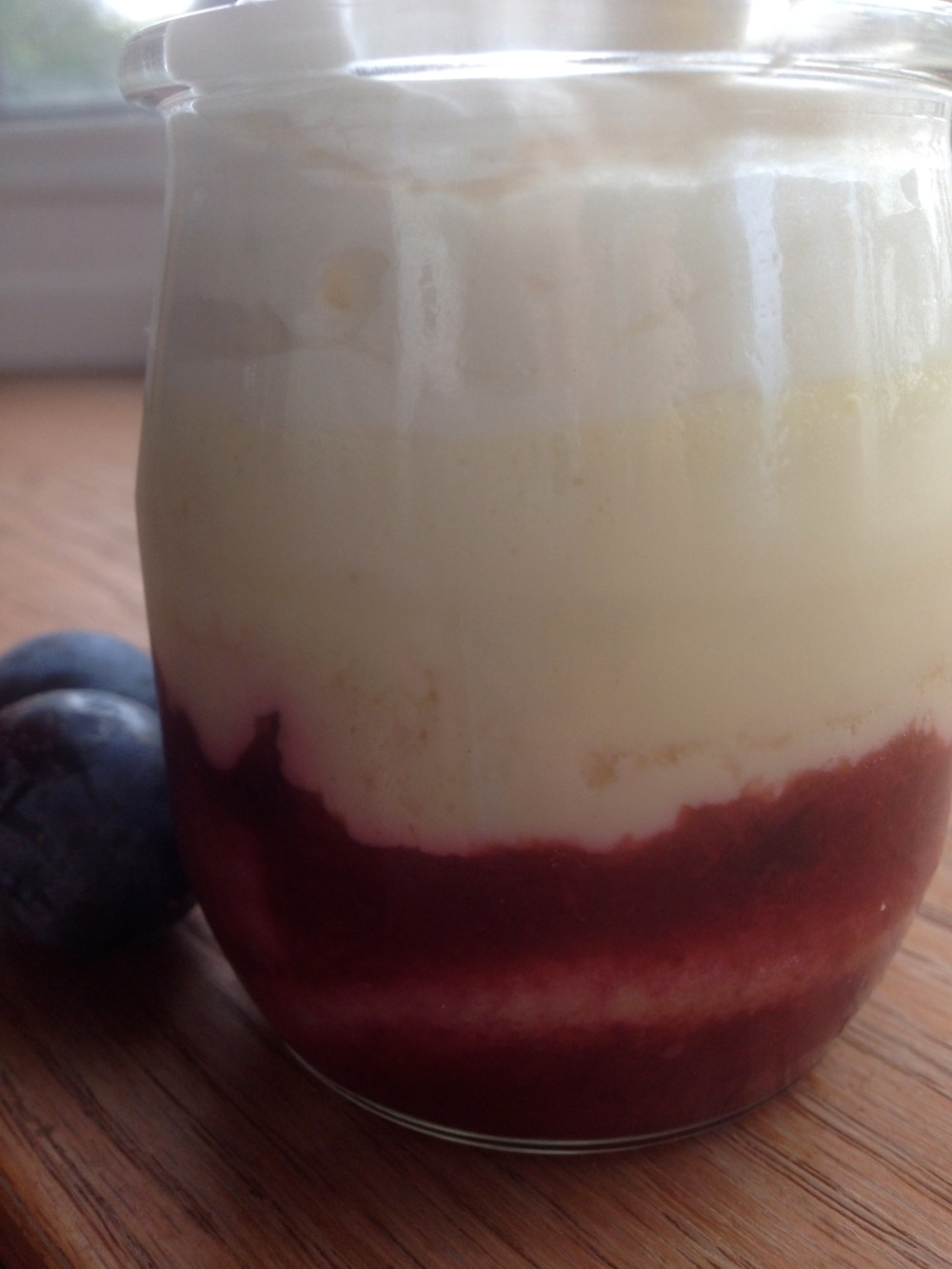
 These wonderful parfait-style custards are the brainchild of Nigel Slater, whose recipes and techniques when it comes to damson plums are, in my opinion, unparalleled. They are a bit like mini trifles, although the mouth-puckering sourness of the damson purée is a far cry from the cloying jelly of the trifles usually served at Christmastime. As always I have tweaked the recipe and method here and there according to my tastes, and you can find the original recipe here. One major departure I have taken from the estimable Mr Slater is the inclusion of a recipe for homemade sponge fingers – I really find it produces a superior result rather than purchasing ladyfingers and breaking them up.
Mr Slater indicates that there will be leftovers, and recommends using them in a fool the following day. It is my experience that there will indeed be leftover damson purée, but no leftover custard. But damson purée is so versatile, having it hanging about is hardly a problem.
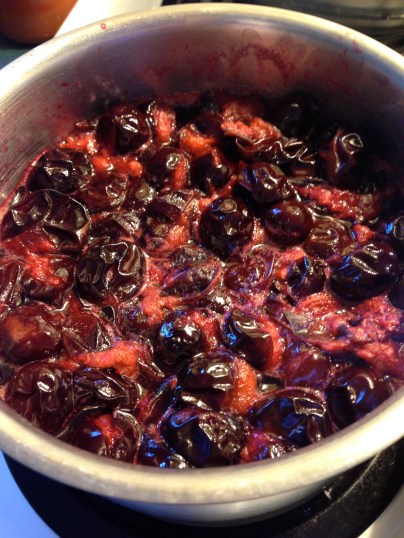
Damson Purée
2 cups damsons, with stones
4 tbsp sugar
3/4 cup water
Place all ingredients in a medium saucepan. Heat it slowly to a boil, then turn the heat down so that it simmers for about 10 minutes. Set aside to cool. In the meantime, make the genoise for the ladyfingers.
Ladyfingers
Cover two baking sheets with parchment paper.
1 cup all-purpose flour
6 eggs, separated
3/4 cup sugar
Preheat your oven to 350 degrees Farenheit. Line 2 baking sheets with parchment.
Sift the flour.
Whip the egg whites at medium high speed until they are foamy.
Add the sugar gradually and whip until the egg whites become firm and glossy, but not dry.
Add the egg yolks and give it a quick whip on high, just until the yolks are incorporated and the mixture is smooth.
Fold in the sifted flour in thirds, using a flexible spatula. Make sure you fold all the flour in – it can hide in pockets throughout the batter.
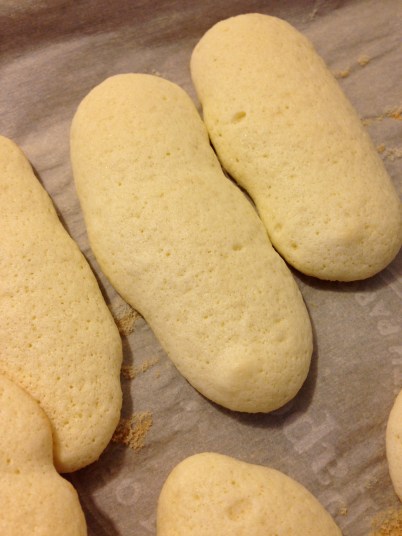
Spoon the batter into a piping bag fitted with a round tip – it is up to you how thin you’d like your ladyfingers to be, so let your preference guide you with regard to size. I use a half-inch tip because I happen to enjoy thick, puffy ladyfingers for dunking in tea or espresso. Pipe the ladyfingers onto the prepared sheets, leaving an inch between them and piping thick lines about 3 inches long. You should get somewhere in the neighbourhood of two dozen ladyfingers.
Bake each sheet one at a time (just leave the other on the counter to wait its turn) for 10-12 minutes, until very lightly golden. You’ll only need about half a batch here; enjoy the rest dunked in your libation of choice.
Custard
3 egg yolks
2 tbsp sugar
1 1/4 cup heavy cream (plus 1 cup cream to top)
pure vanilla extract
Pour the cream into a medium saucepan and heat it slowly to a boil over medium heat. In the meantime, whisk the egg yolks with the sugar and a few drops of vanilla extract in a medium bowl until the mixture turns pale and thick. When the cream has just boiled, pour it in a thin stream into the yolk mixture, whisking quickly all the while, until it has been incorporated and the mixture is uniform. Be careful here not to pour in the hot cream too quickly, or else you’ll scramble the eggs!
Return the custard to the pot, once again over medium heat, whisking quickly and deeply into the corners so as to avoid scrambling. Watch closely during this time; you want to catch the custard when it has thickened slightly, enough to coat the back of a wooden spoon. If you are able to dip a wooden spoon into the custard, run a finger through the custard along the back of the spoon and see that the line remains, it has thickened enough. At this point remove the custard immediately from the heat, still whisking, and set it to cool. Whisk it every once in a while as it cools. It will be runny – there is no extra thickening agent used here. Allow it to cool completely.

Assembly
Break the ladyfingers into pieces and stuff them into the bottoms of several tumblers or ramekins – 6 to 10 dishes, depending on how big you’d like these custard cups.
Pour the cooled damson purée into each dish, on top of the ladyfingers. Check to make sure the purée is absorbed evenly, and add a little more if you notice dry patches. You should aim to use up about half the purée you’ve made. (This seems like a lot, but the ladyfingers are quite absorbent.)
Once the ladyfingers have absorbed the bulk of the damson liquid, pour the cooled custard on top to form the next layer. Use up all the custard. Trust me.
Finally, whip the reserved 1 cup of cream to soft peaks. Be careful not to over whip, since it will sink into the custard rather than resting on the top. Spoon a generous tablespoon of softly whipped cream into each dish, on top of the custard. No one will complain if it’s mounded up a bit.
 Iced and Spiced